


Forensic Psychology Methods: How Criminal Profilers Analyze Criminal Behavior and Evidence
True crime documentaries have made criminal profilers into cultural icons — but behind the dramatized version lies a real scientific discipline with rigorous methods, measurable results, and strict courtroom standards. Forensic psychology sits at the intersection of the human mind and the justice system, informing everything from active criminal investigations to whether a defendant is fit to stand trial. So what is forensic psychology really, and how do its practitioners analyze criminal behavior and evidence? Here’s a clear-eyed look at the methods that actually work.
What Is Forensic Psychology and Its Role in Criminal Justice
Forensic psychology is the application of psychological science to legal questions. Forensic psychologists evaluate defendants’ mental states, assess the risk that offenders will reoffend, consult on criminal investigations, treat justice-involved individuals, and testify as expert witnesses in court.
Their work spans the entire justice pipeline. Before trial, they conduct competency evaluations and assist investigators with behavioral analysis. During trial, they provide courtroom testimony on mental health questions. After conviction, they inform sentencing, parole decisions, and rehabilitation planning. What unites all of it is a commitment to evidence: forensic conclusions must survive cross-examination, so the methods behind them have to be scientifically defensible.
Criminal Behavior Analysis: How Profilers Identify Offender Patterns
Criminal behavior analysis starts from a simple premise: behavior reflects the person. The way an offense is committed — the location chosen, the level of planning, how the offender interacted with the victim and the scene — reveals information about the individual behind it.
Analysts distinguish between modus operandi (the practical methods used to commit a crime, which can evolve as offenders learn) and signature (behaviors that serve psychological needs rather than practical ones, which tend to stay consistent). That consistency is what allows investigators to link related crimes and build a behavioral picture of an unknown offender.
Behavioral Markers That Reveal Criminal Intent
Certain patterns at a crime scene point toward premeditation rather than impulse: evidence of surveillance or planning, tools brought to the scene, efforts to control the environment, and deliberate attempts to avoid detection. By contrast, chaotic scenes, improvised weapons, and disorganized escapes suggest impulsive or emotionally driven offenses. This distinction matters legally as well as investigatively — intent is a core element of criminal charges, and behavioral evidence helps courts weigh it.
Situational Factors That Influence Offender Decision-Making
Behavior never occurs in a vacuum. Forensic psychologists also examine the situational side of the equation: opportunity, stressors, intoxication, peer influence, and environmental triggers that shaped the offender’s choices in the moment. Understanding these factors serves two purposes — it sharpens the accuracy of behavioral assessment during a criminal investigation, and it identifies intervention points that can reduce reoffending later. Person and situation together explain criminal conduct far better than either alone.
Psychological Profiling Techniques Used in Active Investigations
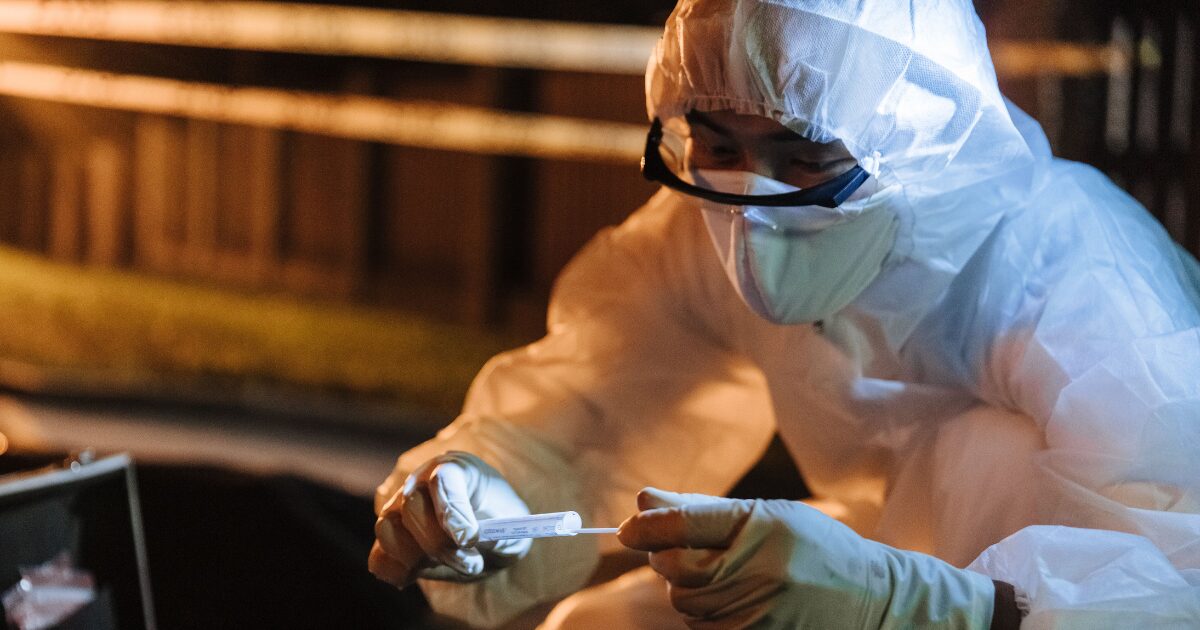
When investigators face an unknown offender, psychological profiling helps translate crime scene evidence into probable offender characteristics: approximate age range, likely relationship to the victim, geographic anchor points, criminal history, and behavioral tendencies. Common techniques include crime scene analysis, victimology (studying why this victim, at this time and place), linkage analysis across cases, and geographic profiling, which uses the spatial pattern of offenses to estimate where an offender likely lives or works.
A note of scientific honesty: classic intuition-based profiling has a mixed empirical track record. Modern practice has shifted toward statistically grounded methods — comparing case features against databases of solved crimes — which is where the field’s credibility now rests. A profile never identifies a suspect by itself; it prioritizes leads and focuses investigative resources.
The Science Behind Offender Profiling and Risk Assessment
The most validated area of forensic psychology isn’t profiling unknown offenders — it’s assessing known ones. Offender profiling in this sense means systematically evaluating an individual’s psychological makeup, history, and circumstances to answer practical questions: How dangerous is this person? What treatment do they need? What conditions would make release safe?
Modern risk assessment combines structured tools with clinical expertise, a major improvement over unaided professional judgment, which research has repeatedly shown to be unreliable on its own.
Assessing Dangerousness and Recidivism Potential
Contemporary evaluators use actuarial instruments and structured professional judgment tools that score empirically validated risk factors: criminal history, age at first offense, substance use, antisocial attitudes, impulsivity, and the strength of social supports. Just as important are protective factors — stable employment, treatment engagement, prosocial relationships — that lower risk. These assessments inform bail, sentencing, parole, and supervision decisions, and while no tool predicts any individual’s future with certainty, structured methods consistently outperform intuition.
Mental Health Evaluation in Criminal Cases
Beyond investigations, forensic psychologists conduct formal mental health evaluations that can shape the entire course of a criminal case. These are not therapy sessions — they’re objective assessments performed for the court, often using standardized testing, clinical interviews, record reviews, and collateral interviews with people who know the defendant.
Competency Assessments and Sanity Determinations
Two evaluations carry particular weight. Competency to stand trial asks whether the defendant can, right now, understand the proceedings and assist in their own defense — if not, treatment to restore competency typically comes before trial. Sanity evaluations ask a different question about the past: at the moment of the offense, did a severe mental disease or defect prevent the defendant from understanding the nature or wrongfulness of their actions? Insanity findings are far rarer than television suggests, but when the question arises, these evaluations become decisive evidence.
Identifying Psychological Disorders in Defendants
Accurate diagnosis in forensic settings is uniquely challenging because the stakes create incentives to exaggerate symptoms (malingering) or hide them. Forensic evaluators use validated psychological tests with built-in validity scales, symptom-consistency analysis, and thorough record review to separate genuine disorders — psychotic conditions, mood disorders, trauma-related conditions, cognitive impairment — from feigned presentations. Getting this right protects both the defendant’s rights and the integrity of the court’s decision.
Courtroom Testimony and Expert Witness Standards
Forensic conclusions must ultimately survive the courtroom, where expert testimony faces formal gatekeeping. Under the Daubert standard used in federal courts and most states, judges evaluate whether an expert’s methods are testable, peer-reviewed, have known error rates, and are generally accepted in the field. Some states still apply the older Frye “general acceptance” test.
For the forensic psychologist, this means every opinion must trace back to validated methods and transparent reasoning. Effective courtroom testimony also demands translation skills: explaining complex behavioral science to a jury accurately, without overstating certainty — because an expert’s credibility, once lost on cross-examination, rarely returns.
Investigative Psychology Applications in Modern Law Enforcement
Investigative psychology — the empirical descendant of traditional profiling — applies data-driven behavioral science across modern policing. Applications now extend well beyond violent crime: interview strategy, statement analysis, hostage negotiation support, threat assessment for schools and workplaces, and prioritization systems for large suspect pools.
Using Behavioral Evidence to Narrow Suspect Pools
When investigations generate hundreds of potential suspects, behavioral evidence becomes a filtering tool. Analysts use behavioral consistency (offenders tend to behave in characteristic ways across crimes), geographic patterns (most offenders operate within familiar territory), and statistical comparison with solved cases to rank suspects by probability. This doesn’t replace physical evidence — DNA, digital forensics, and witness testimony still close cases — but it tells investigators where to look first, saving time when time matters most.
Building Your Forensic Psychology Career With Treat Mental Health Washington
Fascinated by what makes people tick? That curiosity is the starting point of every career in psychology — forensic or otherwise. The path typically runs through a doctoral degree, supervised clinical training, and board certification, but it begins with a genuine interest in understanding human behavior, including your own.
At Treat Mental Health Washington, we believe understanding the mind shouldn’t be reserved for the courtroom. Whether you’re a student exploring the psychology field, a professional working in high-stress justice or law enforcement roles, or someone navigating your own mental health questions, our clinicians provide the evaluation, therapy, and support to help you move forward. Contact Treat Mental Health Washington today — whatever brought you to this article, we’re here to help.
FAQs
How do forensic psychologists distinguish between criminal intent and impulsive offender behavior?
They analyze evidence of planning versus spontaneity: surveillance of the victim, tools brought to the scene, and detection-avoidance efforts indicate premeditation, while chaotic scenes and improvised actions suggest impulsivity. Evaluators also weigh the offender’s history, mental state, and situational stressors. The distinction informs both investigative strategy and how courts assess intent.
What psychological markers predict whether an offender will reoffend after release?
Research consistently identifies key risk factors: prior criminal history, young age at first offense, antisocial attitudes and peers, substance use, impulsivity, and unstable employment or housing. Protective factors like treatment engagement and strong social support reduce risk. Structured assessment tools that combine these variables predict recidivism far more accurately than clinical intuition alone.
Can mental health disorders affect criminal responsibility during courtroom proceedings?
Yes, in specific circumstances. A severe disorder may render a defendant incompetent to stand trial until treated, or — much more rarely — support an insanity defense if it prevented them from understanding their actions’ wrongfulness. Mental health evidence can also mitigate sentencing. A diagnosis alone, however, never automatically eliminates criminal responsibility.
How does investigative psychology narrow suspect pools using behavioral evidence analysis?
By exploiting consistency. Offenders tend to repeat characteristic behaviors and operate within familiar geography, so analysts compare crime scene behaviors against solved-case databases and map offense locations to estimate an offender’s home base. Suspects are then ranked by fit, letting investigators prioritize leads rather than pursue hundreds of possibilities equally.
What qualifications make someone an admissible expert witness in criminal court cases?
Courts look for relevant education (typically a doctorate), licensure, specialized forensic training, board certification, and demonstrated experience with the specific question at issue. Under the Daubert standard, the expert’s methods must also be scientifically valid — testable, peer-reviewed, and generally accepted. Credentials open the door; defensible methodology keeps testimony admissible.