





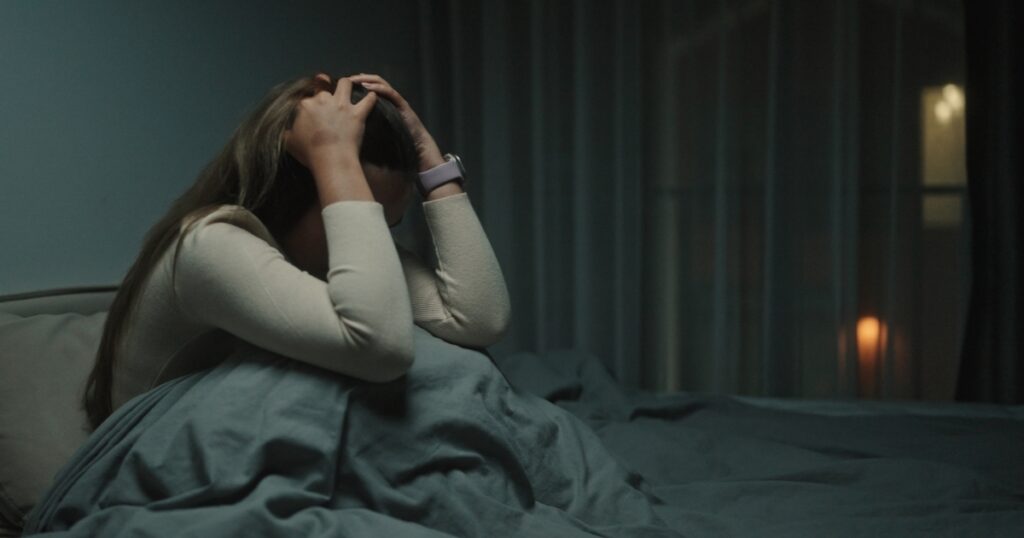
You made it through the workday, handled your responsibilities, and kept your mood steady — but the moment evening settles in, a wave of sadness washes over you. The shift feels sudden and confusing, especially when nothing specific triggered it. If you’ve been asking yourself, “Why do I get sad at night?” you’re not alone — this experience is more common than you might think, and it’s rooted in real biological and psychological changes that happen in your brain as daylight fades. Understanding nighttime sadness isn’t just about labeling the feeling — it’s about recognizing the interplay between your body’s internal clock, accumulated stress, and the quiet space that evening creates for unprocessed emotions to surface.
Evening sadness isn’t a character flaw or a sign that something is fundamentally wrong with you. It’s often a predictable response to how your brain chemistry shifts after dark, combined with the absence of daytime distractions that keep difficult feelings at bay. This blog will walk you through the science behind evening mood changes, identify common triggers that intensify sadness before bed, and offer concrete strategies to reclaim your evenings. If you’ve been wondering why emotions feel heavier at night, you’re about to get answers — and actionable steps forward.
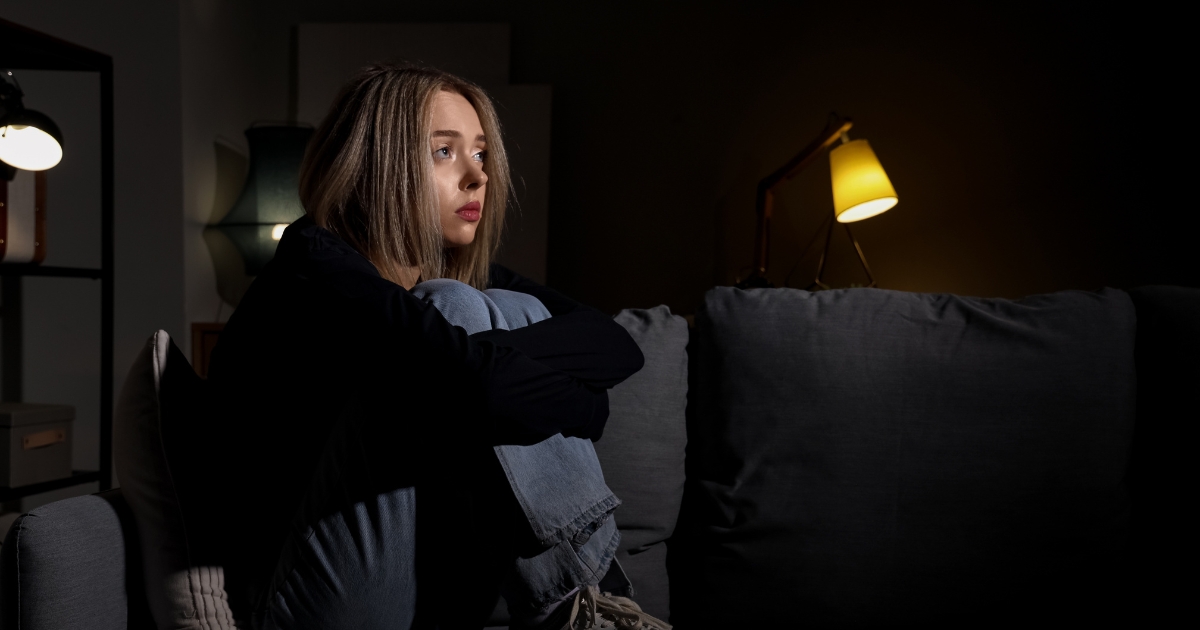
The Biology Behind Nighttime Sadness
Your brain doesn’t operate the same way at 9 p.m. as it does at 9 a.m., and circadian rhythm and mood are deeply connected. Cortisol — often called the stress hormone but more accurately described as your body’s natural alertness signal — peaks in the morning to help you wake up and handle demands. As evening approaches, cortisol levels naturally decline, which helps explain why you get sad at night from a biological standpoint, removing a buffer that helps you manage stress and regulate emotions during waking hours.
At the same time, melatonin production ramps up as darkness signals your brain to prepare for rest, while serotonin — a neurotransmitter that stabilizes mood — decreases. This neurochemical shift creates a biological vulnerability window where you may experience evening sadness.
The brain’s operational mode shifts as well. During the day, external demands keep your prefrontal cortex highly engaged. When evening arrives and stimulation decreases, your brain shifts toward a more reflective, internally focused state. This is when the limbic system, which governs emotions and memory, becomes more active relative to the prefrontal cortex. The result: emotions feel more intense, memories resurface with greater emotional charge, and your capacity to rationalize or reframe negative thoughts weakens.
Common Triggers That Make Evening Loneliness Feelings Worse
Biology sets the stage for why you get sad at night, but specific psychological and environmental factors determine whether you experience mild melancholy or intense sadness. Rumination — the repetitive focus on distressing thoughts — intensifies when the structured demands of the day disappear. Without meetings, tasks, or social interactions to redirect your attention, your mind has the capacity to replay conflicts, regrets, and worries on a loop.
Evening loneliness feelings become especially pronounced when you’re physically alone and aware that others are likely spending time with friends or family. If you’re single, estranged from family, or living far from close friends, the contrast between your quiet evening and an imagined social ideal can trigger profound sadness.
Decision fatigue and emotional exhaustion accumulate throughout the day, leaving you with fewer internal resources to manage stress by evening. Every choice you make depletes a finite reserve of cognitive and emotional energy. By the time you reach home, that reserve is often empty, which means your capacity to regulate mood, resist negative thoughts, or engage in self-care is significantly reduced.
The most common nighttime depression causes include:
- End-of-day exhaustion depletes the mental energy required for emotional regulation, leaving you more vulnerable to sadness and irritability.
- Lack of structured evening activities creates unscheduled time where negative thought patterns can take over without competing demands for attention.
- Social media comparison triggers feelings of missing out or inadequacy when you see others’ curated social activities during hours you’re alone.
- Unresolved stress from the day resurfaces when your mind finally slows down and has space to process what you avoided earlier.
How to Stop Feeling Sad Before Bed With an Evening Reset Routine
If you’ve been wondering why you get sad at night and want to learn how to stop feeling sad before bed, the most effective approach is building a structured evening protocol that interrupts the biological and psychological patterns driving low mood in the evening. A time-blocked routine gives your brain predictable cues that it’s safe to relax, while specific interventions at each stage prevent rumination from spiraling.
Start your evening reset at 6 p.m. with a transition ritual that marks the end of work mode and the beginning of personal time. At 7 p.m., engage in a structured activity that requires moderate focus. This occupies your prefrontal cortex in a way that prevents rumination without being so demanding that it adds stress.
| Time Block | Activity Focus | Purpose |
|---|---|---|
| 6 p.m. | Transition ritual (change clothes, brief walk, gratitude journaling) | Create psychological boundary between work and personal time |
| 7 p.m. | Structured engagement (cooking, hobby, social call) | Occupy prefrontal cortex to prevent rumination |
| 8 p.m. | Relaxation without screens (stretching, reading, music) | Reduce stimulation while maintaining gentle focus |
| 9 p.m. | Pre-sleep wind-down (dim lights, shower, bedtime routine) | Signal nervous system to prepare for rest |
When Nighttime Sadness Signals Something More
Occasional evening mood dips are normal, but persistent patterns warrant professional attention. If nighttime sadness interferes with your ability to sleep, maintain relationships, or function the next day, you may be experiencing symptoms of clinical depression or an anxiety disorder.
If you or someone you know is in crisis, call or text 988 to reach the Suicide & Crisis Lifeline, available 24/7.
Therapy addresses the root causes rather than just managing symptoms in the moment. Cognitive-behavioral approaches help you identify and restructure the thought patterns that fuel nighttime rumination, while behavioral activation strategies ensure you’re engaging in activities that support mood stability throughout the day. If circadian rhythm disruption is a factor, clinicians can work with you on sleep hygiene interventions and light exposure protocols that realign your internal clock with your environment. For some individuals, medication may be appropriate to stabilize neurotransmitter levels that are contributing to evening mood crashes.
What Treatment for Nighttime Depression Actually Looks Like
Treatment for nighttime sadness varies based on the underlying cause — whether you’re asking “Why do I get sad at night?” due to circadian disruption, unresolved trauma, or clinical depression. Cognitive-behavioral therapy for insomnia (CBT-I) is particularly effective when evening mood disturbances are linked to sleep problems, as it addresses both the thoughts that interfere with rest and the behaviors that perpetuate poor sleep.
Clinicians may also explore whether your nighttime sadness is part of a broader pattern of depression with diurnal variation — a subtype where symptoms consistently worsen at specific times of day. This pattern often responds well to a combination of therapy and medication, particularly selective serotonin reuptake inhibitors that stabilize mood across the 24-hour cycle.
| Treatment Approach | Primary Focus | Best For |
|---|---|---|
| Cognitive-Behavioral Therapy (CBT) | Restructuring negative thought patterns and rumination cycles | Individuals whose sadness is driven by repetitive negative thinking |
| Interpersonal Therapy (IPT) | Improving relationship patterns and social connection | Those experiencing loneliness or relationship-related distress |
| Dialectical Behavior Therapy (DBT) | Building distress tolerance and emotion regulation skills | People who struggle with intense emotions and impulsive responses |
| Medication Management | Stabilizing neurotransmitter levels (serotonin, norepinephrine) | Clinical depression or anxiety with biological components |
| Light Therapy + Sleep Hygiene | Realigning circadian rhythm and improving sleep quality | Disrupted internal clock contributing to evening mood drops |

Get Professional Support at Treat Mental Health Washington
You don’t have to accept nighttime sadness or keep asking, “Why do I get sad at night?” without answers. Effective interventions exist for evening mood drops. The strategies outlined here offer a starting point for reclaiming your evenings, but if sadness persists despite your best efforts, that’s a signal to reach out for professional support. Treat Mental Health Washington specializes in helping individuals understand and address the root causes of mood disturbances, including patterns that worsen at night. Our clinicians use evidence-based approaches tailored to your specific needs, whether that means addressing what causes emotional changes at night, building emotion regulation skills, or treating underlying depression or anxiety. You deserve evenings that feel peaceful rather than heavy, and support is available to help you get there. Contact us today to schedule an assessment and start building a path toward more stable, restful nights.
FAQs
The following questions address feeling worse in the evening, mental health decline, and when to seek professional support.
1. Is it normal to feel sadder at night than during the day?
Yes, you’re experiencing something extremely common due to natural biological shifts in your brain chemistry and hormone levels. The absence of daytime distractions also allows suppressed emotions and worries to surface more easily. However, persistent evening sadness that interferes with sleep or daily functioning warrants professional evaluation.
2. What causes emotional changes at night related to my circadian rhythm?
Your circadian rhythm controls cortisol and serotonin production, which both decline in the evening hours, reducing your natural mood stabilization. This biological shift makes you more vulnerable to negative emotions and rumination after dark. Melatonin rises as darkness falls, which is essential for sleep but also corresponds with decreased activity in brain regions responsible for executive function and emotional regulation.
3. Can feeling worse in the evening be a sign of depression?
Persistent nighttime sadness, especially when accompanied by sleep disturbances, loss of interest in evening activities, or thoughts of hopelessness, can indicate clinical depression. If evening mood drops interfere with your quality of life for more than two weeks, professional evaluation is recommended.
4. Why are emotions stronger at night even when I wasn’t lonely during the day?
Loneliness intensifies in the evening because nighttime is culturally associated with social connection and intimacy — when you’re alone, the contrast feels more pronounced. Reduced cognitive distractions also make you more aware of unmet social or emotional needs. Your brain’s shift toward a more reflective, internally focused state in the evening amplifies these feelings compared to the busy, externally focused daytime hours.
5. What’s the fastest way to stop sad feelings before bed?
Interrupt rumination with a structured activity like journaling specific worries, practicing 10 minutes of deep breathing, or engaging in gentle movement. Creating a consistent pre-bed routine that includes these elements trains your brain to shift from emotional processing to sleep preparation mode. If late-night anxiety and sadness persist despite these interventions, professional support can help address underlying causes.